Showing posts with label boys literacy. Show all posts

Wednesday, 16 August 2017

Planning for 2017 - Step One

I'm cutting it really, really fine. We're less than a month before we're going to start school, and I haven't really made my plans for the year.

Looking for inspiration in the stars

I thought it might be fun - perhaps instructional - for other homeschoolers to watch me fumble through my plan for 2017-2018.

As you may have gathered if you've followed me for any time, I have four children aged between 10 and 17, and I teach them all together using the Charlotte Mason method.

aka Killer, Rocky, Phoenix, and Timmy


There are shades of interpretation for the CM method, and while there are a lot of purists out there, I'm not one of them. To my mind, Charlotte Mason - genius as she was - was still a classroom teacher and planned, implemented, and managed her philosophy via the lens of being a classroom teacher.

I know ... sacrilege, right?

Well, I'm a former classroom teacher, too, and know for a fact that what one does in a classroom is not what one necessarily needs to do in their living room with their own children.

So, I have taken to heart CM's short lessons, living books, narration/copywork/dictation, while devising my own plan of subjects and scope/sequence.

We always study the Bible, memorize Bible verses, use a math curriculum for each child such as Life of Fred or Shillermath, and then have a stack of books for English literature, philosophy, science, biography, spiritual lives, history, economics, and geography. We work through our stack a little each day, reading in 15-20 minute intervals, and by this step-wise approach, we will usually complete many of the books we start out with in September. (If we don't, we just let them carry over till the next year).

Here's a book that took us over 2 years: celebration!


Added to this, we have a weekly co-op in my house. Last year, we studied Texas History and Biology. Tomorrow, I'm going to discuss with my colleague about this year's plan, but it looks like it will be US Government and Chemistry.

My high schoolers have also been attending outsourced online courses for five years now: both have completed four years of English, and now are working their way through Ancient History and Spanish. All these are undertaken with Dreaming Spires Home Learning, my own international tutorial company where I'm in charge of the English.


Online doesn't have to mean isolated

But what will be our book list for our morning time together? And how am I going to implement my new planning approach with simple spiral notebooks?

These are the questions I'm seeking to answer over the next two weeks, and you're invited to join me on my journey.

Even homeschoolers with more than a decade of experience will have their confusions, uncertainties, and conundrums. What we probably also have is an overall vision for our kids, and an underlying routine.

Thursday, 16 March 2017

Boy and Computers - Our 21st-Century Dilemma

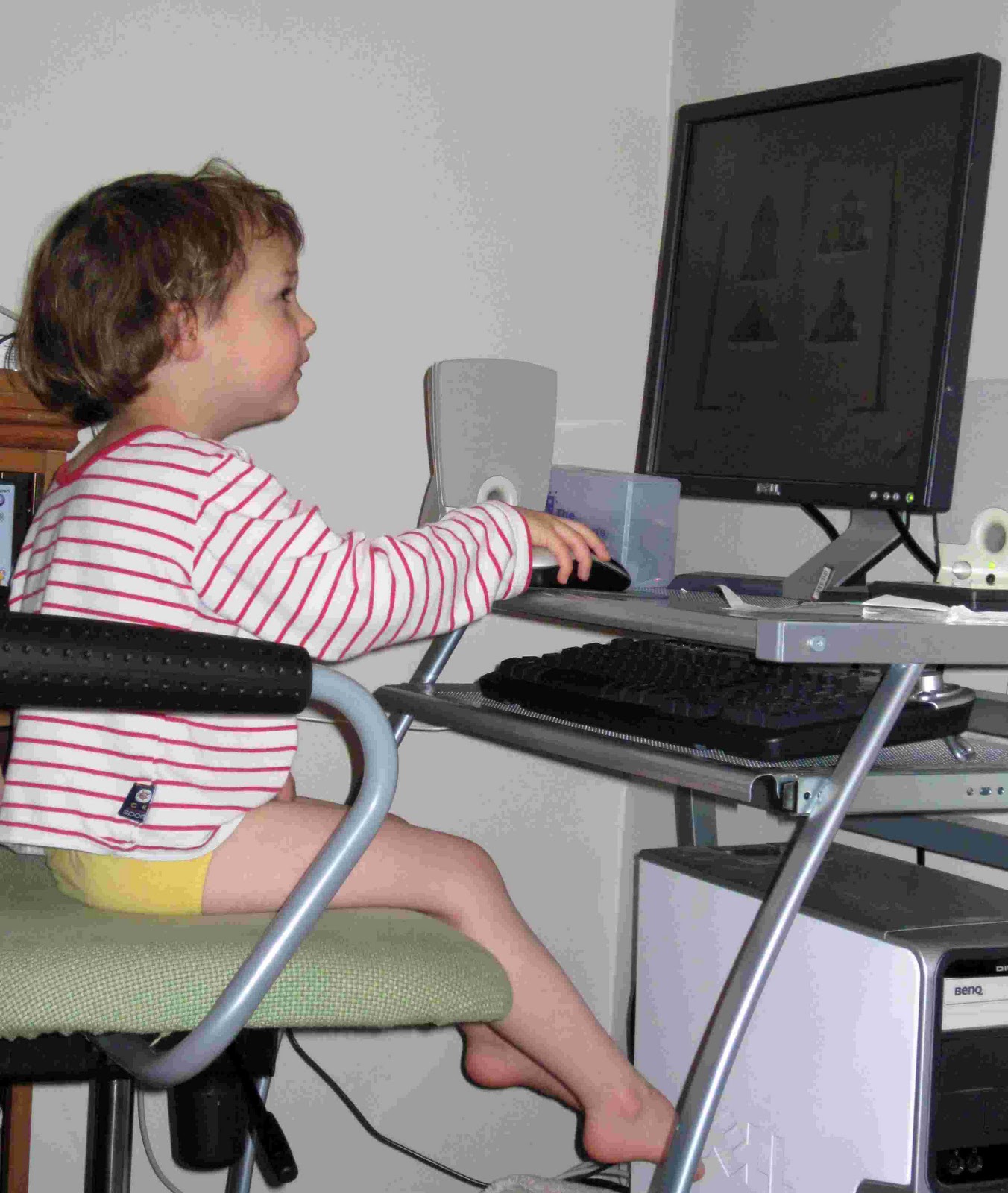
This is a post that I’ve been meaning to write for a long time - probably for four years or more — and it’s about computer use, particular when homeschooling boys.

We all recognize there’s a problem. It may not be your child, but you know that Facebook is full of moms (and it’s almost always moms) who write SOS messages about their child’s obsessive focus on some kind of screen, be it tv, computer, laptop, tablet, or gaming device.

I know all about this. I’ve been there … in spades!

When my eldest son, who is now 14, was about ten years old, we went through a period where he was exhausted all the time. We soon learned that it was because he was setting his alarm for 2 am so he could sneak down and play Minecraft all night.

Little Boys and their Games


Ever since then, I have been a loud voice on the internet for vigilance and caution when it comes to screens. I have read just about every book there is on the subject. Some titles that come to mind are Boys Adrift, Wired Child, several titles by Michael Gurian, and numerous scientific studies where changes in white and gray matter in brain scans make for some very uncomfortable reading.

Further, we had an au pair for a season when my children were younger, a Spanish student who was improving her English in order to start graduate studies in optometry (where all the reference books are written in English). She stressed to me almost daily that children need to limit their screen time for the sake of their far vision. Numerous studies backed up her assertions: myopia is on the rise because kids don’t get outside enough and flex those far-vision muscles.

Even with all my research and my vigiliance, I’m still struggling to keep my boy off screens. One reason is that he clearly is a “technopath” (a term borrowed from the delightful super-hero film called “Sky High”). Honestly, if your computer is acting up, he’ll come over and hug it, and it will work again!

He even took an MIT course about computer coding when he was 12, and received an A.

It’s tough. What to do? He’s good at this! 


Got a problem? Let me fix it!


I posed this question to Richard Freed, the psychologist who wrote Wired Child. He said to me in a private email that children need to have screens limited in their young lives for a whole host of reasons. He suggested to me that I have my son pursue a broad-ranged academic path of study rather than focus too much on technology itself, and to ensure that any computer use is productive rather than simply gaming, with an emphasis, perhaps, on coding. He added:

  • “Future tech use will continue to pose risks of addiction as your son has already been there, and because it makes it harder for kids to use tech productively as they get older.” (private correspondence)

All these years of concern and suspicion came to a head this week. He was supposedly doing his homework for an online class, but he was acting especially secretive when his siblings were walking into the room, so I decided to secretly film him. The 35-minute video was very telling.

As I thought: it was 25 minutes of swapping between windows - Reddit social media threads, pop-up windows of games, notifications from his buddies on Steam, chat boards with classmates - and, mixed among these numerous and frequent distractions, he probably managed ten minutes of reading an online summary of his book and re-wording it for his assignment.

Thirty-five minutes of screen time where five, at most, was productive. (Although I would argue that even that five minutes was also unproductive because he read a summary instead of the book - since I teach this class, I can tell you that the teacher is MOST UNIMPRESSED!)

So you know what happened, don’t you? Time for confrontation.

"I'm comin' after you, Boy!"


But here’s where things go a different path than you probably expect. A fourteen-year-old is a much different animal to a ten-year-old, and he actually stated his case. 

Sure, he says — summary and not book? Bad. Sorry. Swapping back and forth between work and play? Could do better. 

However, he notes that he swims up to 2 1/2 hours every day for swim team; he contributes to jobs around the house like mowing the lawn. That day, he had cooked lunch for everyone; walked the dogs with me; wanted to go on a bike ride to the shops but I said he couldn’t (not exactly what I said, but the bottom line is the same - I talked him out of it); he had showered and played guitar and helped my younger son fix something on the computer game he was being allowed to play, and that night, he was going to his friend’s house for a night of socializing. He had even done some of his homework even though it was Spring Break.

In the course of a normal week, he went on, he had youth group one night, a leadership class every other week, a 3-hour slot for volunteering in the library, an academic co-op, Trail Life (a group like Boy Scouts), and church. He had spent the weekend camping. In the pouring rain.

"I'm really a sensible guy."

Where in there, he asked me, was his life not well-rounded?

Suddenly, I felt a bit foolish.

So I have re-evaluated what it is that I’m so concerned about, because I still have an uneasiness about the length of time he’s on the computer, especially if it’s going to be lop-sided against his academic things. 

I’ve boiled it down to this: I would like more reading from a hard copy of a book and more writing by hand. I think these are media and skills he still needs to cultivate, and I realize that to be reasonable, I’ll have to give him a check-list of exactly what and for how long. We can both measure the progress then, and I won’t have a leg to stand on after that. 

Further, I still feel he needs to limit the time he’s looking at a brightly lit screen. if we could negotiate no more than 2 hours on the screen a day, plus some time for him to do social media on his wifi-only smart phone, and no screens at all between 9 pm at night and 9 am in the morning, then I think I would be fully satisfied that his life was balanced.

Judging from our reasoned conversation this week, I have every confidence that we’ll come to this mutually acceptable arrangement, and we will have both moved forward in our relationship, especially in terms of honoring each other.

Most of all, I've learned something really important: this teen-parenting stuff isn't all bad.


My lovable teen!

Monday, 21 July 2014

August Challenge -- Join us for a month without Screen Time!

Join us in our No-Screen-Time August Challenge of reading top-notch books instead of wasting time with TV and computer games. Pop over to Facebook and let us know what books you'll crack open on the 1st of August. (While you're there, "like"our page, please!)


August will be our books-only month


I was inspired to do this challenge by two things: first, despair at how much of our lives is wasted by living in the virtual world -- telly, computer, email, and even my children's legitimate desires to write books and design 3-D animations are eating up the hours that could be better spent on reading the hundreds of excellent books that currently lie forlornly on our shelves, gathering dust.

Second, I was inspired by Charlotte Mason's writings, especially her 6th volume about a philosophy of education -- as I understood more and more that a child's innate desire for knowledge is ignited through living books, I realised that we couldn't spark a flame if we kept all the matches in the box!

How many books can we get through in a month? That's the big question! We normally have three or four books on the go for our homeschooling, another one or two for pleasure, my elder two (in the online English courses I teach) have up to six books they're working on each week. We also usually spend hours in the car and the pool for swimming training, but all these activities stop in August, so there should be a chance to tackle at least three substantial books for each child's level.


Some thick; some thin; all brilliant!

Phoenix is now 14 and is taking on Middlemarch ahead of her Great British Novels course this year, The Screwtape Letters and the Doris Lessing Canopus in Argos series are also on her shelf (or, virtual shelf, since some are on Kindle).

Killer at 11 is going to have a choice of books from the Ambleside Online list for independent reading: titles like The Borrowers, Puck of Pook's Hill, The Chronicles of Narnia series, a selection of Edgar Allan Poe stories, and Treasure Island.

Rocky, having just now come into her own as an independent reader, has a lot of catching up to do in terms of a twaddle-free zone. Out go the Unicorn School and Flower Fairy books, and in come Laura Ingalls Wilder, the Billy and Blaze series, Doctor Doolittle, and one of my favourites, Pippi Longstocking.

Busy Timmy is 7 and, after getting glasses last year and a Kindle with its adjustable type-face, has started reading books for pleasure when there's time for doing so. He devours the Burgess animal books, but I'm going to try him with a Pocketful of Goobers (about George Washington Carver), Little Owl's Book of Thinking, and a beautiful edition of Hans Christian Andersen tales.


Fancy one of these??


And me? Well, I will still be checking my emails and FB since we'll be coming up to final enrollment for my online courses and I need to stay connected for my job, but I will be sure to a) limit my time on the screen, and b) do it only once the kids have gone to bed.

Book-wise, I usually have about five books on the go at any one time. On August 1st, though, I'm going to crack open George MacDonald's Sir Gibbie. The recommendations for this novel are very high, and the reviews on Amazon are glowing. Others on my list are Thomas Merton's Seven-Storey Mountain and Fahrenheit 451.

Will this be too much for thirty-one days' worth of reading? Too daunting to try? I'm expecting a few days' of screen withdrawal and another day or two as they get into the habit of reading for pleasure. My hope is to avoid incentivising them, threatening, or cajoling. I really want them to feast on the pleasure of reading, just for the sake of the dishes in their grasp and not the whip behind nor the carrot in front of them.

Truly, watch this space!

Thursday, 28 November 2013

RSC Richard II Homeschooling Viewing

We were so fortunate that the Royal Shakespeare Company allowed us to be a venue for free web-streaming of its latest play, Richard II, starring David Tennant of Dr Who fame.

A scene from the RSC Richard II

Nearly thirty homeschooled students and their parents met at the Charlbury Baptist church on a nippy Friday morning, some coming from as far away as Bristol and northern Wales.

Warm and Cosy while a King is deposed.

It was a great opportunity to see Shakespeare performed like this, and such accomplished actors.  Too bad they changed the script, though, and lost some of the ambiguity surrounding Richard's death and Henry's complicity in it.

We hear they're going to broadcast Henry IV Part 1 next year in the same way, and I'm getting my name on that waiting list to offer the opportunity to local homeschoolers again.

My question makes the board -- I'm famous!


Saturday, 26 May 2012

Boys and Copywork

Killer is my oldest boy; he's 9.  He follows the Ambleside Online curriculum (sort of) and, as it adheres to the Charlotte Mason method, he has a daily expectation that he does something called copywork.

In a nutshell, copywork is copying down an extract from another source, such as a good poem or a selection from a book or even from the Bible.  The idea is that a child can practice writing neatly, can learn from a good example about punctuation, spelling, and grammar, and can do so in context (in other words, in a realistic setting and not as a list of random words, or as a fill-in-the-blank workbook).

Recently, a friend of mine with a boy the same age was asking me about how much should be expected of her son, as she and her husband were nearly coming to blows about the number of words they were making the child write down every day, and the child was coming unglued because it seemed too much for him.

Try to make writing a pleasant experience
Just before I "reveal" my answer to her, let me just give a bit of background about Killer and his friend.  Neither one likes to write much.  In years past, Killer absolutely refused to write, unless perhaps it was a caption to one of his stick-figure montages.  His map-skills workbooks, which he loves, are filled with the first letters of all his answers, rather than the complete words -- so, for example, if the answer were "Red Bull Boulevard", his book says "R B B".

His older sister used to devour the Getty-Dubay series of handwriting workbooks, and Killer never touched them.

He finally agreed to some handwriting practice when I bought Teodorescu's excellent book called Write from the Start (though, if you look it up, you'll see there's much more about shapes and doodles and fluid lines than there is about letters per se).

Never the less, this year I decided to leap into AO properly and expect him to undertake copywork.  I decided to use Joyce Herzog's Bible Quotes, which I've owned for years but hadn't dusted off in a while.

I was slightly worried that she starts off in such a basic way, but considering my son was writing practically nothing last year, and was stuck in an all-caps rut, I decided softly-softly might be the best approach. Here, for example, is his first entry for copywork in September 2011.


Writing nearly every day, and letting his handwriting develop organically with, perhaps, occasional side-by-side discussions of how to make letters flow together more smoothly, this is how he's writing in May 2012:


Not only is he writing more fluidly, writing longer passages, and getting all the usual benefits from copywork, he is also doing so without any complaints, arguments, tantrums, or anxieties.

Therefore, I want to encourage you if you currently have a non-writer.  Little and often.  Patience.  It isn't about quantity, but about quality, and letting the child have a pleasant experience while he or she is doing it so they don't baulk at this amazing and wonderful opportunity to learn to write organically.

Thursday, 3 November 2011

NaNoWriMo Takes Over

"I may be some time"

Legend has it that these were the last words of Captain Scott during his ill-fated Antarctic expedition.  Right now, they're going to be mine, as I embark on National Novel Writing Month.

In order to produce a 50,000-word novel in 30 days, I think I will have to put my nose to the writing grindstone.

In the meantime, have a look at the NaNoWriMo site for its free writing workbooks for kids.

See you in December.

In the meantime, I'll leave you with a snapshot from our trip to Stonehenge yesterday.

Wednesday, 28 September 2011

One reason Lapbooking Works for Boys

One of my favourite homeschooling gurus is Robin Sampson from Heart of Wisdom.  She wrote something about lapbooking which I recently read, and I thought she hit the nail on the head about why they work for boys when she described how they integrate both halves of the brain.

Why is it important to get both halves working?  Research shows that the male brain is more prone to stick with the left-half of the brain, whereas the female brain is more likely to use two halves in conjunction.  It may be one of the reasons that girls are more verbal at an earlier age than boys.  It's also one of the reasons that women seem to recover better from strokes than men.

Research aside, it just seems to me a good idea to make sure the whole brain is being exercised, and Robin clarifies this in her sixth point of seven in her blog post "Seven Reasons Lap Booking Works"


We have two halves to our brains which think in different ways. The left side thinks linearly, following direct linkages to related ideas. The right side prefers the whole picture with flow, images, and colors.
Lap booking brings together your left brain (words, logic) and right-brain skills (images, color, rhythm, space) which dramatically increases your mind power.
  • The more you integrate left- and right-brain activities, the more the brain’s performance becomes synergetic. This means that each cortical skill enhances the performance of other areas so that the brain is working at its optimum. (Sperry, R.W.)
  • Research shows that the brain likes to work on the basis of association and it will connect every idea, memory or piece of information to tens, hundreds and even thousands of other ideas and concepts. (Anokhin P.K.)


Tuesday, 15 February 2011

Try Making Books to Encourage Writing

In my previous post on this blog, I wrote about why boys don't like to write, and gave some suggestions for encouraging them to do so.

Then I came across a faded old copy of an out-of-print book called "An Experiment in Education" by Sybil Marshall which had another excellent idea.

Just before I explain her suggestion, I want to spend a few lines in praise of this old book.  Yes, it was written in 1963 and chronicles over thirty years of teaching in a one-room schoolhouse near Cambridge in England, but her insights into juggling multiple ages in a single classroom are the stuff of beauty for homeschooling parents.  She is particularly good about using art for educational purposes, but I shall say more about that in a future blog entry as I experiment in my own home a bit more.

Meanwhile, back to boys and writing.  In my previous post, one of the suggestions I made for getting boys to write involved diagramming or drawing first, then writing about the drawing second.  I said "think map instead of a list of directions."

Marshall's description of making homemade books is similar, and though I haven't yet put it into practice, seems pedagogically sound.

Very sound.

Basically, each child should be given a blank booklet, perhaps made of 4 or 8 pieces of paper folded in half and stapled in the middle, and if you want to make it slightly more permanent, wrap a piece of coloured card around the outside as a cover before you staple it all together.

The child should designate the little book as a story from the beginning -- a trip to a farm, a day at the zoo, what the frogs are doing in the pond right now, or even something entirely fanciful (Marshall gives the example of a little girl who imagined herself as a cat who went on magical adventures, such as going to the moon, to the circus, to the seaside).

Then *daily*, children should draw a picture in their book to go with their story.  If they aren't good writers yet, then they should take the book to the teacher/parent and dictate what they want written under the picture.  You could vary this by dotting the letters for the child to trace, or dictating the spelling of words while the child writes them him-/herself.

One of Phoenix's first books:
note that mummy wrote the words
(click on image to enlarge)

As fluency progresses, children will be able to write their own words for their stories, and from these could come a few choice discussions about spelling, punctuation, grammar.  If the words are in pencil, these corrections can be made by the child, but perhaps not insisted upon so you don't throw water on their fire.  A separate booklet for grammar, spelling, etc, would probably be better if you feel the need for something more formal.

This process seems to mirror that which my oldest child, who is now 10, followed naturally, but I can see the good sense in having little books as a daily assignment for all the children.  I'll post in the future about how I get on.

Killer demonstrates the process
of drawing first, writing last

One cautionary note: Marshall points out that the process is best when it's drawing before writing, and not the other way around.  As she writes: "Thought must precede written work, and the picture first serves to inspire and then order thought, so that the words flow with confidence and clarity afterwards."  She admits that illustrating a story once the words are already written is "pleasant", but has less value -- "if the words have been satisfying enough in their own right, the very sensitive child may even be irked by being asked to do the same thing twice."  (Both quotes are from p. 143 of the 1968 CUP edition)

(Sybil Marshall died in 2005.  Her obituary can be read here).

Sunday, 23 January 2011

Why do (most) boys hate writing?

One of the most common complaints I hear from parents about boys -- whether they're home educated or at schools -- is that they don't want to write anything.

Why do (most) boys hate to write so much?

The short answer is that boys develop later in that area of the brain. In fact, research has shown than girls' brains develop in the region of language and fine motor skills about six years earlier than boys!  On the flip side, boys develop their spatial memory areas about four years earlier than girls.

Unfortunately, our expectations as educators are geared more toward writing than spatial memory, and so the boys get labeled or pushed too hard too early.

 Is it any wonder they can develop a hang-up about writing?

Logic states, therefore, that boys should be allowed to develop more slowly in this area, and in the meantime, be provided with opportunities and strategies that can help them achieve as writers at their level!

Here are a few ideas based on experience with my own boys, aged 3 and 8:

  • Use the computer.  Because boys develop earlier in their spatial skills than their literacy skills, they might find it easier to write using a keyboard than trying to form letters with a pencil.  Further, writing on a word processor is less permanent and easier to correct, so boys needn't be too worried about mistakes (and who hasn't had to deal with a tantrum when something didn't work out just so??!!).  An ICT educator recently told me that the schools in her district were going to explore this link in a bid to improve boys' literacy, so it's an idea that seems to be gathering some momentum.
  • Handwriting practice.  "Killer" has rejected most handwriting programmes, some with violence and/or chucking books into the rubbish bin.  Getty-Dubay italic book A was thrown across the room.  Draw, Write, Now has the right idea -- drawing pictures and writing a two sentence caption underneath.  Unfortunately, that was still too many words as far as Killer was concerned, so I got many well-drawn pictures and no writing.  Our success story has been Write from the Start by Teodorescu -- a handwriting programme that's more about connecting dots, drawing circles around triangles, and practising curves.  Killer and Timmy both get their respective books out in their spare time.  You might ask if a handwriting programme is necessary at all, and I would probably say it isn't; however, the Teodorescu book allows us to tick that box without ticking each other off.
  • Let him dictate. We're eclectic homeschoolers who err on the side of Charlotte Mason method, so I check on the children's comprehension of our reading materials by getting them to "narrate", or tell back, what I've just read.  This is primarily oral narration from the age of 7-11, or until a child is fluent enough in writing that his/her skills in handwriting won't disadvantage the thoughts making it to the page.  Phoenix, for example, is capable of writing her own narration.  Killer, on the other hand, will dictate his narration to me, which allows me to save some of his work on paper without coming to blows about the way in which that work gets processed.
  • Copywork. This is another hallmark of the Charlotte Mason method.  Some might argue it's an unnecessary battle, but I like how it helps a child learn well-written sentences, good vocabulary, and complicated spelling, in a natural way.  Any Charlotte Mason book or website will tell you more about it, but here's an example.  My advice when it comes to boys? Keep it short.  Keep it large.  Offer a reward such as some computer time when he completes this along with three or four other topics, or break up the writing skills with a game, some dancing, some outdoor play.  
  • Use movable alphabets.  These are individual letters cut out of thick card, usually with the vowels in blue and the consonants in red.  They're excellent for training young children to read, but also useful for the reluctant boy to practise spelling and writing without having to use fine motor skills which he may find difficult still.  Here is an article about using movable alphabets, and also a very good Montessori book about teaching reading and writing which includes more detail and exercises for the younger child.
  • Diagram, or draw first.  If you think about it, this is common sense.  In their shoes, you would want to draw something with a great deal of detail and action and excitement, everything happening at once, rather than write a word-by-word, sentence-by-sentence explanation.  Think map rather than a list of directions and you may see what I mean. 
  • Read Michael Gurian's book "The Mind of Boys" for more excellent tips and the science behind them.

The bottom line is that we're wrong when we think boys aren't that good at writing.  They certainly *can* be good at writing, but maybe not when we want them to be.   It's a matter of being patient with them.  Remember, Charlotte Mason, the Victorian educator and theorist, didn't have her children write their narrations till they were at least 11.  

Perhaps we shouldn't either.


Wednesday, 23 June 2010

Boys and Reading

If you’ve got a boy, then chances are that you are worried about his reading attainment.  Maybe it’s just a gut feeling, if you homeschool, or it’s there in black and white every time you receive a school report or have a parents’ evening.

You aren’t imagining things – boys often read less well than girls.

The statistics are sobering: the average boy reads 1-1/2 years behind the average girl; he reads less than 30 minutes a day; he’s likely to be 7-percentage points behind the average girl in reading assessment at the end of primary-school age.

Then there are the scare stories – men with poor literacy struggle with lasting relationships later in life; 43% live alone; 22% still live with their parents; only 50% are satisfied with their lives, while those with good literacy rank at 78%.

Something must be done, right? (You don't want your son living at home with you when he's grown, do you?)

Here are some quick tips for improving your son’s reading ability.

First, don’t panic.  Boys often read later than girls because physiologically their brains don’t finish developing till the age of 14 or so, whereas girls finish at about 11.  In other words, you probably still have time to nurture this important life-skill.

Second, if you want your son to read, then you need to model the habit yourself.

Third, it’s important that dads and other male influences are seen to be reading: your son doesn’t want to engage in an activity that’s “only for girls”.  Men often claim work pressures or lack of confidence as reasons for not reading to their children, but their role in this is absolutely essential.  Print out this article and show it to them -- their involvement matters!

Finally, you have to find the right material, so he’ll want to read.  This will vary from child to child, but there are two main categories.  No, I don’t mean fiction vs. non-fiction, although these are useful divisions. 

I mean, read-alouds or read-to-selfs.  Books for reading aloud can be trickier, harder, perhaps in editions with smaller print and fewer illustrations.  Those for reading alone might need to appear simpler so those young eyes can latch onto the words without straining.

With those two categories in mind, it’s important, then, that you make the time to read to your son.  The physical enjoyment of it is as crucial to the experience as is the intellectual stimulation.


I’ve included several websites in my Suggested Links section for choosing good boys’ books.  I also suggest the fantastic resource by Jim Trelease called the Read Aloud Handbook which covers the why’s and wherefore’s of reading to your children, and the reasons why you should do so till they’re well into their teens.

Finally, I want to list two popular authors with my own son: Frank Cottrell Boyce, and Steve Cole, whose Astrosaurs series is very popular here in the UK for its combination of dinosaurs and astronauts.
What are your favourites at home?

(Be sure to click on the comments link to tile-down the great things people are saying!)